← Blog/Legal & compliance
E-signature: what actually holds up legally
Signature levels, evidence retention, cases where it isn't enough. What to know before signing remotely.
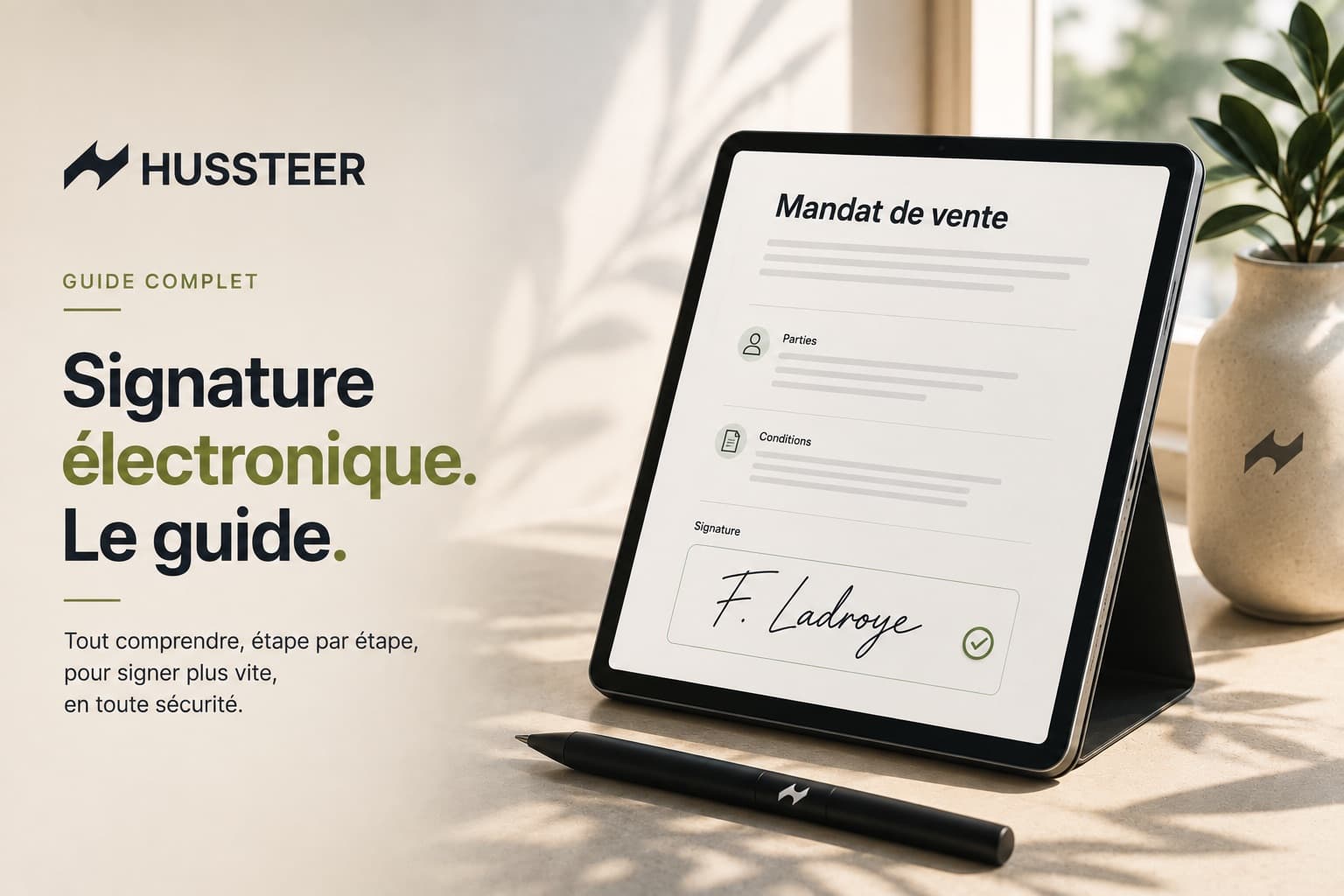
“They clicked I agree, so it's signed.” Maybe. Or maybe, the day the seller disputes it, you will discover you have no way of showing it was really them.
An electronic signature is not a tick box. It is a mechanism of proof, and its worth depends entirely on what you can demonstrate afterwards.
Three levels, not one
The European eIDAS regulation sets out three levels, and what separates them is not technical: it is who carries the burden of proof.
- Simple signature: any electronic means expressing consent. A click, a box, a typed name. It is valid, but whoever relies on it must prove it is reliable.
- Advanced signature: uniquely linked to the signatory, capable of identifying them, and any later change to the document is detectable.
- Qualified signature: an advanced signature based on a qualified certificate and a certified device. It is the only one carrying a presumption of reliability, and presumed equivalent to a handwritten signature.
A court cannot dismiss a signature merely because it is electronic. It can, however, find that you failed to prove it was reliable.
What counts is not the signature, it is the file
This is what most agencies find out too late. What matters is not the image of the squiggle at the bottom of the PDF: it is everything that allows you to reconstruct what happened.
A serious evidence file keeps, for each signature, enough to answer four questions.
- Who signed, and how was their identity checked?
- When exactly — a timestamp that stands up, not the agency server's clock.
- What, precisely: which version of the document, with a fingerprint proving it has not moved since.
- How consent was collected: which pages were shown, in what order, and what the signatory saw before approving.
Together these form the audit trail. Without it, an advanced signature is worth no more than a scan.
How long must you keep all this?
Longer than you would think. A dispute over an agreement can surface years after the transaction — which is precisely when the signature provider you used at the time may have gone out of business.
So the question to put to any supplier is simple: what happens if we stop paying you? If the answer is that the evidence file becomes unreachable, then it is not an evidence file. It is a rental.
Where it is not enough
Some deeds fall outside ordinary electronic signature, and mixing them up is expensive.
Notarised deeds involve a specific arrangement. Some commitments require handwritten wording whose electronic equivalent follows its own rules — guarantees being the best-known example. And some documents remain subject to formalities that an electronic medium does not waive.
For an agency's everyday work — agreements, viewing slips, offers — electronic signature is accepted. For anything outside that routine, the question arises case by case, and the right person to answer it is not your software vendor.
What to check before choosing
Four questions are enough to rule out most vague offerings.
- Which eIDAS level exactly, and on which document? A provider answering “eIDAS compliant” without naming the level has not answered.
- Is the evidence file exportable and readable without their tool?
- Is the signatory's identity verified, and by what means?
- Where is the evidence kept, and for how long?
One last word, and it applies to this whole article: the above describes a framework, not your situation. Before rolling electronic signature out across your agreements, have your procedure reviewed by a lawyer. That is an hour of advice against a dispute you would lose for want of proof.